Aviation Switching Module – NSN 4920-01-250-2696 (AS-IS / Untested): Specialized Aircraft Test and Control Hardware
Aviation Switching Module – NSN 4920-01-250-2696 (AS-IS / Untested): Specialized Aircraft Test and Control Hardware
Blog Article
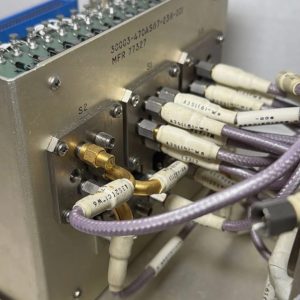
The Aviation Switching Module – NSN 4920-01-250-2696 (AS-IS / Untested) should be purchased with the understanding that no operational, calibration, serviceability, compatibility, or installation guarantee is being made.
An Aircraft Switching Module may interact with test equipment, aircraft systems, electrical circuits, or support hardware, while an Aerospace Switching Module should not be energized without suitable technical information.
An Aircraft Electrical Switching Module can have commercial value for technicians, while an Aviation Electrical Control Module or Aerospace Electrical Control Unit requires qualified bench evaluation before operational consideration.
Accurate use of Aviation Control Module, Aircraft Electronic Switching System, Aerospace Switching Unit, and Aircraft Electrical Module terminology improves SEO without creating unsupported functional claims.
Why NSN Verification Matters
The seller should provide clear photographs of every label, marking, connector, switch, control, mounting point, enclosure surface, and included accessory.
Unknown markings should be photographed and recorded rather than interpreted without support.
Untested Switching Module Condition
AS-IS and untested means the module is offered without confirmation that it powers on, switches circuits, communicates with associated equipment, meets specifications, or performs its original function.
Improper voltage, polarity, grounding, current, signal input, or connector pin assignment can damage the module and connected equipment.
Choosing an Aircraft Switching Module
The actual role depends on internal circuitry, switch configuration, connector pinout, associated system design, and technical documentation.
A detailed visual inventory supports informed evaluation of the Aircraft Switching Module.
Inspecting Aerospace Electrical Hardware
An Aerospace Switching Module may use a durable enclosure, secure connectors, internal wiring, switches, relays, terminal assemblies, circuit boards, or other configuration-specific components.
Connectors should be examined for bent pins, pushed-back contacts, corrosion, contamination, cracked inserts, damaged threads, broken keyways, missing caps, and impact marks.
Electrical Switching Module Condition
Discoloration near connectors or switches may indicate electrical heat, chemical exposure, or ordinary aging and should be investigated.
The module should not be modified simply to produce a temporary power-on result.
Aviation Electrical Control Module Functions
The exact interface must be established through diagrams, manuals, connector data, or verified system information.
Aggressive solvents, scraping, repainting, or polishing may remove original information.
Aircraft Power Switching Module Considerations
Controlled bench evaluation should be completed by personnel familiar with aerospace electrical hardware.
Any successful limited test should be documented precisely without changing the overall status beyond what was actually verified.
Aerospace Module Troubleshooting
The repair process should preserve original markings and configuration whenever practical.
A common-looking relay, switch, resistor, connector, or wire may not be an acceptable substitute.
Choosing an Aircraft Signal Switching Module
Signal circuits can be sensitive to grounding, shielding, contact resistance, connector condition, and electromagnetic interference.
Shielding, grounding straps, connector shells, cable clamps, and enclosure bonding can influence signal performance where included in the original design.
Professional Aviation Module Evaluation
Associated wiring, power supplies, interfaces, switches, displays, sensors, test sets, or aircraft equipment may be required for meaningful operation.
Compatibility should be verified through NSN, part number, manufacturer, connector layout, revision level, modification status, and equipment application.
Aircraft Test and Support Equipment
Detailed condition reporting supports fair commercial Aerospace Switching Module evaluation.
Removable demonstration leads or external training fixtures may preserve originality better than permanent alteration.
Aircraft Electrical Distribution Hardware
Professional evaluation helps determine whether the unit serves a power-distribution role or another specialized function.
Preserving the original structure protects the Aerospace Power Distribution Module and its resale value.
Control Unit Connector and Switch Review
The unit should be photographed before and after any preservation work.
Continuity measurements, insulation checks, contact-resistance testing, and component examination may be appropriate when performed by qualified personnel.
Aviation Electrical Power Management
An Aviation Power Control Module can have specialized applications within aircraft systems, aerospace ground equipment, maintenance platforms, or test installations.
Power-control components may retain electrical energy or contain circuits requiring special handling depending on internal design.
Aviation Switching System Troubleshooting
A systems approach supports more accurate troubleshooting and restoration.
The module should not be blamed until related wiring and equipment are considered where the original system is available.
Aerospace Switching Unit Storage and Handling
The unit should not be stacked beneath heavy equipment or left on conductive surfaces.
Insured and trackable transportation supports responsible sales of specialized aviation hardware.
Evaluating Surplus Aerospace Equipment
Commercial evaluation should focus on total project suitability rather than the purchase price alone.
Remote buyers should request current photographs of the actual unit instead of relying on catalog images or pictures of similar equipment.
NSN 4920-01-250-2696 Buying Checklist
A detailed review reduces misunderstanding and supports realistic purchasing decisions.
- Verify the module identity through its NSN, data plate, physical configuration, connector arrangement, and available technical references.
- Check for burned odors, melted material, arcing marks, water entry, chemical residue, and internal loose components where visible.
- Require packaging that protects connectors, switches, labels, enclosure corners, mounting brackets, controls, and loose accessories from movement and impact.
Professional Bench Evaluation
A qualified technician may use controlled and current-limited equipment appropriate to the module design.
Test results should identify which circuits or functions were checked and which remain unknown.
Aircraft Electrical Module Repair Planning
Replacement parts should be selected according to electrical rating, mechanical fit, material, environmental requirements, and original design intent.
Every repair should record the date, technician, fault found, parts replaced, measurements, testing performed, and remaining limitations.
Selecting a Surplus Aerospace Switching Unit
The Aviation Switching Module – NSN 4920-01-250-2696 (AS-IS / Untested) can provide restoration, research, parts, training, collection, or professional evaluation value when its identity and condition are understood clearly.
The strongest buying decision begins with confirming the NSN, manufacturer, part number, serial number, configuration, connector layout, condition, storage history, modification status, included equipment, and intended use.
Whether the item is purchased for restoration, training, parts recovery, display, testing, inventory, or professional repair, transparent information and controlled handling provide the strongest foundation.
With prompt attention to switches, connectors, wiring, enclosure condition, corrosion, labels, and internal components, the module can preserve its technical and commercial potential.
Report this page